When designing a rooftop solar system, one of the most critical decisions revolves around how to handle mismatch and shading. In a traditional string inverter system, the performance of the entire array is limited by the weakest panel, a phenomenon often compared to a kink in a garden hose. To solve this, the industry turned to Module-Level Power Electronics (MLPE). The two dominant players in the MLPE space are Power Optimizers and Microinverters. While both technologies aim to maximize energy harvest at the individual panel level, they do so through fundamentally different engineering approaches. Understanding these differences is key to optimizing your solar investment.
The Microinverter Approach
A microinverter is essentially a miniature inverter that sits on the back of each solar panel. The primary function of a microinverter is to convert the Direct Current (DC) electricity produced by the panel into Alternating Current (AC) right at the source.
Because the conversion happens at the module level, every panel operates independently. If one panel is covered in snow or shaded by a nearby tree, it has zero impact on the rest of the system. This makes microinverters highly scalable and incredibly resilient. However, this convenience comes with a higher price tag. Putting the complex task of DC-to-AC conversion on a hot rooftop can lead to higher hardware costs and potentially more complicated maintenance over the lifespan of the system.
The PV Optimizer Approach
PV optimizers take a different path. Instead of converting DC to AC on the roof, they are DC-to-DC converters. They condition the DC electricity and perform Maximum Power Point Tracking (MPPT) for each individual panel before sending it to a central string inverter located at ground level.
This hybrid approach offers the best of both worlds: the efficiency and shading-mitigation of module-level tracking, combined with the reliability and cost-effectiveness of a central inverter. Because the optimizer itself is simpler than a microinverter, containing fewer electronic components, it often boasts a lower failure rate and a lower upfront cost.
Efficiency and Performance
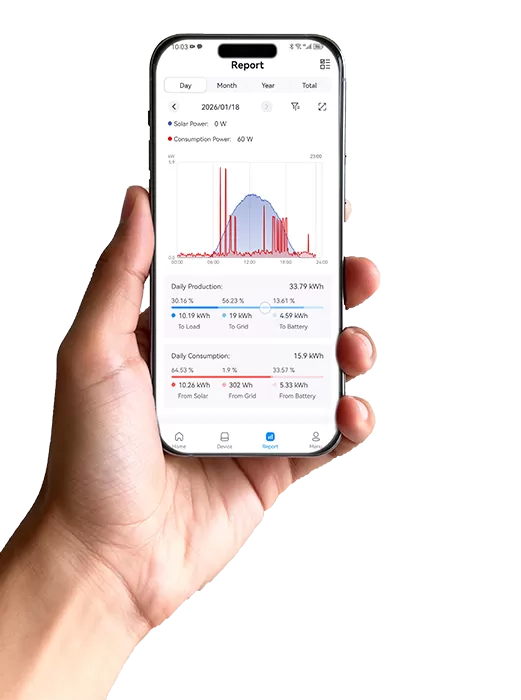
When evaluating PV optimizers, the goal is to eliminate the bottleneck effect in a string. This is precisely where the SOLARMAN Module PV Optimizer excels. The SOLARMAN solution is designed to increase system power generation by as much as 30% in environments where shading or module mismatch due to aging or orientation is a factor. By ensuring that each module operates at its peak power point, the SOLARMAN module optimizer prevents a single underperforming panel from dragging down the entire string. Furthermore, it integrates seamlessly into the SOLARMAN monitoring ecosystem, providing users with granular, module-level data that allows for proactive maintenance and real-time performance tracking.
| Feature | PV Optimizers | Microinverters |
| Conversion Site | DC-to-DC on roof; AC conversion at central inverter. | DC-to-AC directly on the roof. |
| Cost | Generally lower upfront cost. | Generally higher hardware cost. |
| Complexity | Moderate; requires a central string inverter. | High; every panel has its own inverter. |
| Battery Compatibility | Excellent for DC-coupled high-voltage batteries. | Best suited for AC-coupled battery systems. |
| Safety | Supports Rapid Shutdown requirements. | Supports Rapid Shutdown requirements. |
| Reliability | Components are simpler and less prone to heat-fail. | No single point of failure, but more complex roof parts. |
Battery Integration and System Scalability
One of the most significant differences is how these systems integrate with battery storage. Power optimizers are often preferred for homeowners looking to install high-voltage DC batteries. Because the system remains in DC until it reaches the inverter/battery interface, there are fewer conversion losses, leading to better round-trip efficiency.
On the other hand, microinverters are prized for their scalability. If you want to add three panels to your roof next year, you simply buy three more panels and three more microinverters. In an optimizer system, you are limited by the capacity of the central string inverter you installed on day one.
Rapid Shutdown Compliance
Both microinverters and power optimizers satisfy modern safety codes, such as NEC 2017/2020, which require Rapid Shutdown. This safety feature ensures that in the event of an emergency, the voltage of the rooftop wires can be reduced to a safe level, usually 1V per module, to protect first responders. The SOLARMAN module PV optimizer includes built-in rapid shutdown capabilities, providing peace of mind alongside its performance benefits.
Which is Right for You?
The choice between a power optimizer and a microinverter often comes down to the specifics of your roof and your budget. If you have a complex roof with multiple angles and significant shading, both MLPE options will serve you well.
However, for many homeowners and commercial operators, the solar optimizer offers a more balanced value proposition. By pairing a central inverter with high-quality MLPE hardware like the SOLARMAN module PV optimizer, you get the benefits of module-level monitoring and shading mitigation without the high cost and complexity of a full microinverter suite. Ultimately, by eliminating the bottlenecks in your system, you ensure that every square inch of your solar array is working as hard as possible to lower your energy bills and reduce your carbon footprint.
 EN
EN
 fr
fr  de
de  es
es  it
it  nl
nl  pt
pt  cs
cs  pl
pl