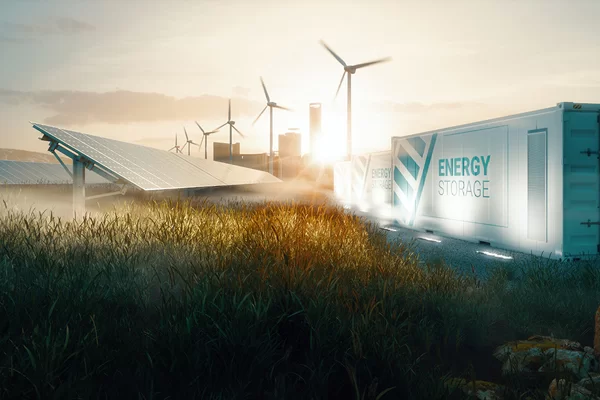
An energy storage system (ESS) is a technology that allows for the capture, storage, and release of energy. It plays a crucial role in the integration of renewable energy sources, grid stabilization, and efficient energy management.
There are various types of energy storage systems available, each with its own unique characteristics and applications. Some common examples include:
Batteries: Battery-based energy storage systems, such as lithium-ion batteries, store electrical energy chemically and release it as needed. They are widely used in electric vehicles, solar energy storage, and backup power systems.
Pumped Hydro Storage: This system utilizes the potential energy of water by pumping it uphill to a storage reservoir when there is excess electricity generation. When energy demand is high, the water is released downhill, passing through turbines to generate electricity.
Flywheels: Flywheel energy storage systems store energy in a rotating mass that is accelerated when there is excess power and then release the stored energy when needed. They are known for their fast response times and high power output capabilities.
Thermal Energy Storage: This system stores energy in the form of heat or cold by heating or cooling a substance, such as water or phase-change materials. The stored energy can be used later for space heating, cooling, or industrial processes.
Compressed Air Energy Storage (CAES): This technology compresses air and stores it in underground caverns or pressurized vessels. When electricity demand rises, the compressed air is released to drive turbines and generate electricity.
Energy storage systems provide multiple benefits, including load shifting, grid stability, peak demand management, and the utilization of renewable energy sources. They can improve the reliability and efficiency of energy systems and contribute to the transition towards a more sustainable and resilient energy future.

 EN
EN
 fr
fr  de
de  es
es  it
it  nl
nl  pt
pt  cs
cs  pl
pl